
Search
What would you like to explore?
Browse all sleepwear, or explore the guide center.
The sleepwear notes
How to Wash Satin Sleepwear: Read the Label First
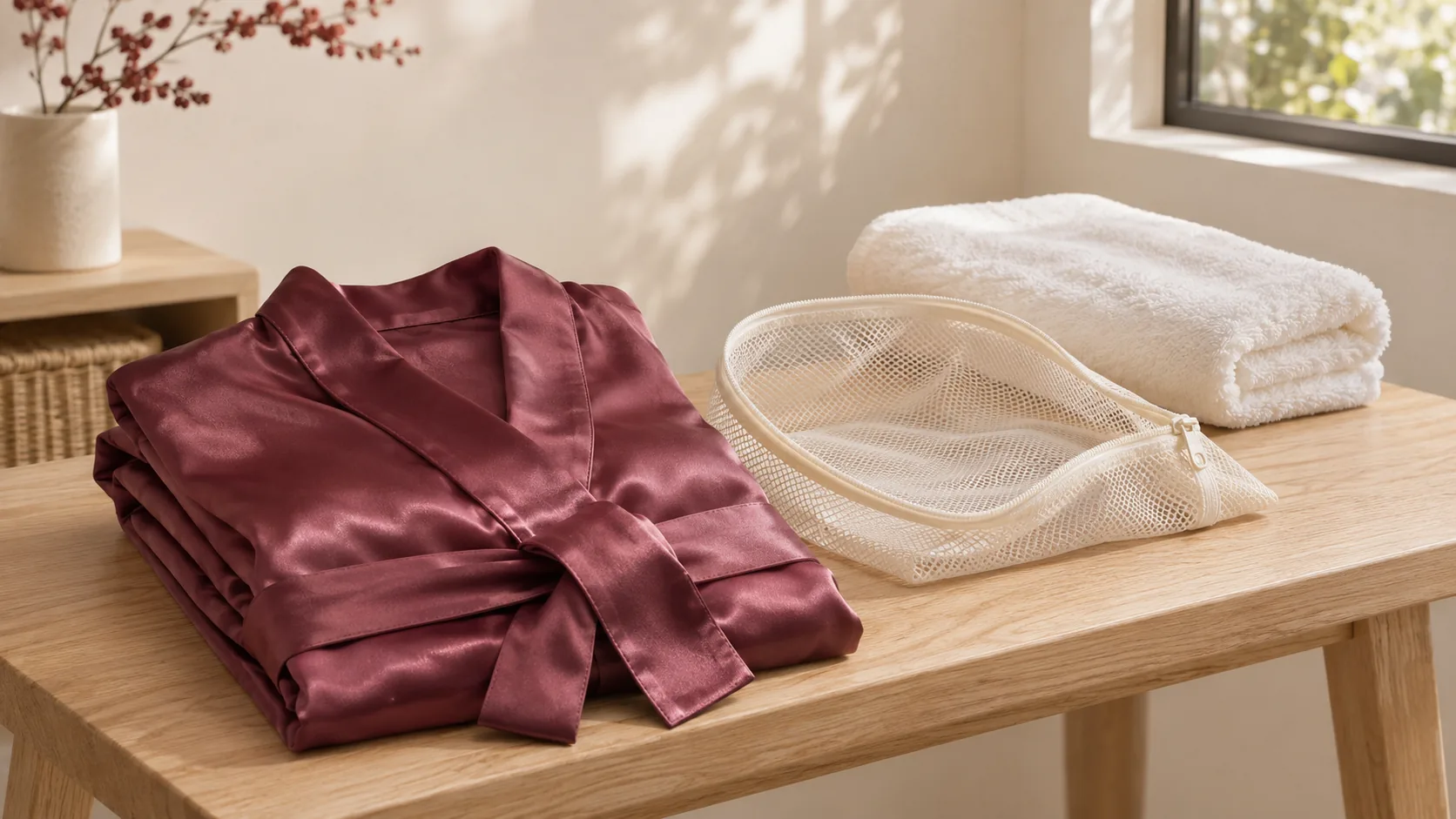
To work out how to wash satin sleepwear, read the garment’s care label before choosing a wash cycle or detergent. Satin describes a fabric structure, not a universal cleaning instruction. Check the permitted washing, drying and ironing methods, then plan the whole process before the robe or pajama set gets wet.
Start with the label, not the shine
A glossy surface cannot tell you whether a garment is washable, which fibers it contains or how its trim will respond to cleaning. CottonWorks describes satin as a weave; the word alone is not proof that a piece is made of silk. Look for the actual fiber information and the separate care instructions.
The FTC’s apparel-labeling overview explains the role of care instructions in helping consumers clean clothing. For your own wardrobe, the practical step is simple: keep the label readable and photograph it if you are worried it may fade.
Read all the instructions together
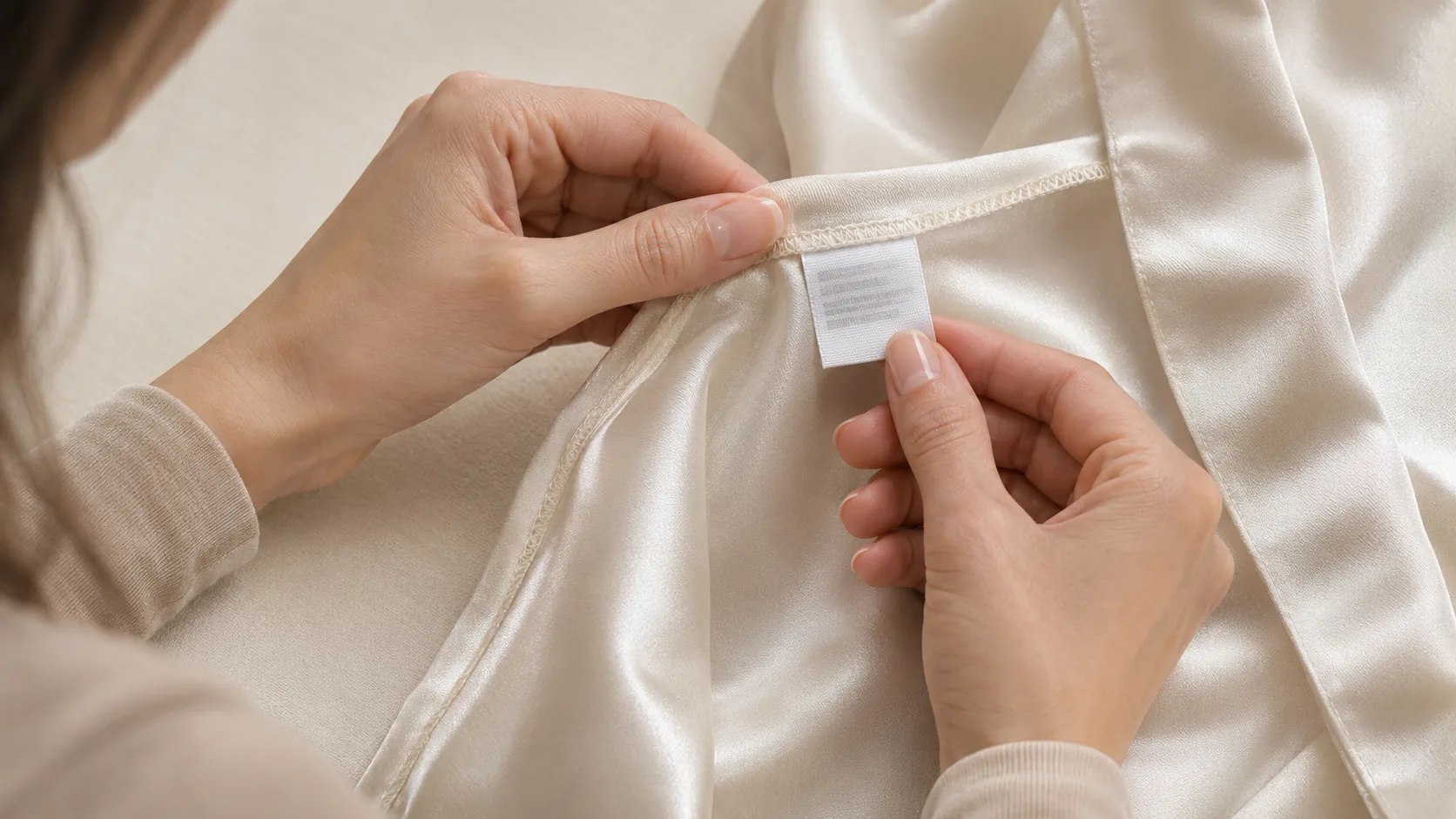
Do not stop at the washing line. A garment may also have limits on bleach, tumble drying, ironing or professional cleaning. Read written warnings as well as symbols, and include any separate belt or removable component in your check.
Keep a quick record of the care label before the first wash, so the instructions stay easy to find.
Choose the cleaning method the garment allows
The decision is about the finished garment, including its seams, trims and finishes. Two robes that look similar can call for different treatment. Use the table as a checklist of decisions to make, rather than a wash recipe for every satin item.
| Check | What to look for | Your next step |
|---|---|---|
| Washing | Hand wash, machine wash or a restriction on washing | Choose only a permitted method. |
| Cycle and temperature | Any temperature or gentleness limits | Match the label to the machine’s settings. |
| Bleach | Allowed type or a prohibition | Check the laundry product too. |
| Drying and pressing | Permitted drying, heat and ironing treatment | Prepare the drying space before washing. |
If you need help interpreting a symbol, compare it with the GINETEX care-symbol guide. Do not treat a temperature shown on a label as a requirement to wash hotter, or assume a washing permission also allows tumble drying.
If the label permits machine washing
Use the stated cycle and temperature limits. Consider which other items would share the load: exposed hooks, rough hardware and heavy garments are poor companions for delicate details. Check whether your garment or washer instructions recommend a protective laundry bag.
If the label specifies hand washing
Follow that method rather than assuming the machine’s delicate setting is equivalent. Read the garment instructions for water temperature and handling, prepare a clean basin, and avoid adding an improvised soak time. If the directions are incomplete, ask the seller before starting.
Keep detergent and stain treatment deliberate
Choose a laundry product suitable for the garment’s actual fibers and the permitted cleaning method. The American Cleaning Institute’s detergent guidance recommends following the product dosage and the garment’s care directions; extra detergent is not automatically a better clean.
Read the product instructions before pouring it onto anything. A cap is not necessarily one dose, and a product designed for another material may not belong on this garment. Do not add bleach or a stain remover simply because the fabric is white.
Describe the stain before choosing a treatment
Note what caused the mark, roughly when it happened and anything already applied. That information is useful if you contact the retailer or a professional cleaner. Avoid repeatedly trying different products on the same area when the label gives you no clear route.
For a treasured piece, an uncertain stain or unclear instructions, stop before experimenting. Bring the full care label and the garment to a qualified cleaner and explain the problem. A small stain does not make an unsupported cleaning method safe.
Finish the drying step before you put it away
Follow the garment’s drying instructions, including any limits on heat or exposure. Do not move a piece into the dryer merely because it is still damp and you are in a hurry. Choose a wash day when you have the right space and enough time for the permitted method.
When it is dry, inspect the cuffs, hem, underarms and belt before storing it. Put it away only when every part is fully dry. If a component dries more slowly than the main fabric, give that part the time it needs rather than judging the whole garment from one sleeve.
Check before using an iron or steamer
A wrinkle is not permission to apply heat. Read the pressing instructions and the appliance directions before using either tool. If the label prohibits ironing or limits steam, respect that instruction; the finish matters as well as the fiber.
Choose a place in the drawer or wardrobe where the garment is not squeezed against rough hardware. Keep a robe’s belt with the robe so it is ready to wear again without rummaging through other pieces.
Choose a robe with a care routine you can keep
When shopping, consider the cleaning routine alongside the neckline, sleeves and length. Ask for any missing care information before buying if it affects your decision. SOMELISE’s sleepwear collection includes several satin robe shapes to compare:
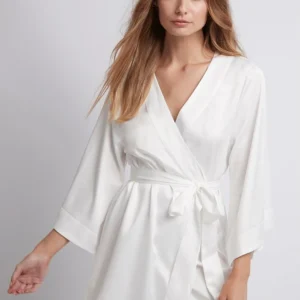
- Satin Wing Sleeve Wrap Robe, shaped by flowing wing sleeves.
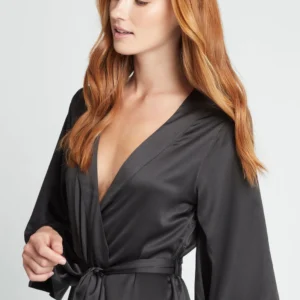
- Mirelle Short Satin Kimono Robe, a short option with kimono-style sleeves.
- Mirelle Long Satin Kimono Robe, a longer, relaxed silhouette.
These descriptions identify the styles, not their washing instructions. Follow the label on the garment you receive. For help choosing the outfit underneath, explore the sleepwear guide.
-

Satin Wing Sleeve Wrap Robe
Price range: $30.00 through $35.00 Select options This product has multiple variants. The options may be chosen on the product page -
Mirelle Short Satin Kimono Robe
$35.00 Select options This product has multiple variants. The options may be chosen on the product page -
Mirelle Long Satin Kimono Robe
$39.00 Select options This product has multiple variants. The options may be chosen on the product page
Satin sleepwear care questions
How do I wash satin sleepwear with no readable label?
Ask the retailer or manufacturer for the care instructions before washing. A product name or photograph cannot supply the missing method safely.
Does satin mean the garment is silk?
No. Check the fiber-content information rather than treating a satin description or glossy appearance as a silk claim.
Can every satin robe go in a washing machine?
No. Machine washing is an option only when the garment’s instructions permit it, using the limits specified there.
Is hand washing always the safest alternative?
No. A garment that should not be washed is not made washable by using your hands. Check the allowed method first.
Can I wash the belt with the robe?
Check any instructions for separate components. Keep the belt accounted for, but do not assume every removable piece has identical care needs.
Can I use the same detergent as my everyday laundry?
Only if it is suitable for the garment’s fibers and cleaning directions. Check the detergent label, dosage and any restrictions before using it.
Should I iron satin on the silk setting?
Do not choose an iron setting from the garment’s shine or name. Use the permitted treatment on its care label and check the appliance instructions.
How often should I wash my satin sleepwear?
Base the timing on wear, perspiration, visible marks and your own routine. Whatever schedule you choose, use the garment’s approved cleaning method each time.